Plugdin Interview: The next step in personalised nutrition: Interview with Melissa Snover, CEO of Nourish3d
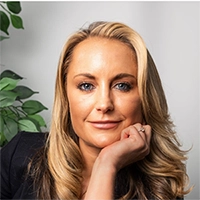 As founders go, Melissa Snover is the complete package. Combining expertise in technology, manufacturing and customer insights, Snover created Nourish3d – a brand of fully-customisable vitamin gummies, manufactured using innovative 3D printing methods and available in a huge variety of flavours.
Despite being named one of the Sunday Times’ 100 fastest-growing tech companies in the UK, Snover is adamant that her journey is only just beginning. Here, she talks about the next stage on her journey as she eyes global markets, and explains how a culture of continuous innovation and experimentation – coupled with a deep commitment to her customers – has propelled her to success.
Hi Melissa, tell us, what inspired Nourish3d, and how did 3D printing become central to your vision?
I started my first food brand in 2010. I was vegetarian and really missed gummy sweets, so I developed my own using vegetarian gelling agents. That product caught the attention of the largest gummy manufacturer in the world, and after growing the brand to over 30,000 stores, I sold it. But seeing their process made me realise how inflexible large-scale manufacturing was – minimum order quantities, slow innovation, huge logistics. I began to wonder how we could make the customer an active part of that process.
3D printing felt like the most applicable technology to make that happen, but when I approached major 3D printing companies, I got a lot of pushback – it was too hard, too expensive, too long a timeline. So I decided to do it myself. I bought 3D printers online, took them apart, taught myself to code, and built a prototype that became the world’s first FDA and FSA compliant food printer. It allowed you to design your own confectionary on a tablet – shape, flavour, even personalise with a picture of your own face – and it would print it for you in five minutes. That was a huge learning curve and a massive leap forward for 3D printing in food.
Eventually, I began to see how this same technology could have a much bigger impact in healthcare and nutrition. We ran feasibility studies, pivoted into personalised medicine, and launched the Remedy Health Group – the parent company behind Nourish3d.
All that hard work has paid off – you’ve been named one of The Sunday Times 100 fastest-growing tech companies. How are things going today?
We’re doing extraordinarily well, especially in Europe. Right now, we’re number one in anti-aging in Belgium and Italy, even beating collagen products. Repeat purchases are off the charts – we’re sometimes struggling to keep stock, which is a good problem to have.
We’re currently in the process of expanding. We launched in China this year, where we sold over 10,000 units in a single day. Next year, we’re looking at growing into America.
I think what The Sunday Times listing has proven is that we’re more than a vitamin brand. Remedy Health Group is a technology developer. Nourish3d is how we bring that technology to life – one enables the other. We’ve developed 29 patented technologies across hardware, software and process to make that possible.
Nutrition is a conservative industry. How do you approach disrupting such a traditional space?
Whenever you’re launching something truly new, there’s a need for education – and that’s fine. I'm not interested in trend-led products or small incremental improvements. I focus on areas in need of disruption, to create better solutions for the long term.
We follow what I call the ‘no-brainer’ concept. We start with an idea of the end product, then work backwards to ensure it’s better in every single way. Our products are personalised, science-backed, sugar-free, vegan, 98% UK-sourced, and wrapped in non-plastic packaging. It’s better in every way. That’s a real no-brainer.
What kind of feedback have you had from customers?
I’m proud to say we're the highest consumer-rated product of our type, with more five star reviews than any similar product in the UK. Our retention rate is 90% annually, and 75% of new customers come through referrals. We haven't spent money on online advertising in almost two years and we’re still attracting new customers. That is a humongous testament to what our product delivers.
Our biggest strength is that we go over and above to ensure that we keep our promises to our customers. We're delivering solutions that they want, we're listening to them, and we’re changing and adding to our concept, ensuring that our offering grows alongside their needs.
Earlier you touched on your expansion plan. How does your technology support that growth?
This is where our technology really shines. Normally, setting up manufacturing in a new country means rebuilding the process from scratch. But we can set up a supply line to make around half a million products at the touch of a button.
This has huge advantages from a regulatory standpoint. The nutrition market is very complicated. For instance, with Zinc, the limit is 5mg in Switzerland, 10mg in France and 12mg in the UK.
For most manufacturers, that would mean either having to go with the lowest dose for everybody, or having separate runs for each territory. We don't have to do that, and so that allows us to be agile.
We can even change the flavour of our product at no extra cost: yuzu in Japan, all sorts of sour varieties in America, sweeter ones in India, lemonade and mint for the Middle East. That flexibility gives us a real edge.
How do you maintain your culture of experimentation as you grow?
Our innovation-first culture is very important to us. It’s what enables us to have a solutions-oriented approach to everything. We have our own tech workshop here, so when you come to work you can talk to an R&D engineer or a designer and brainstorm ideas on the spot. We actively ask people to suggest improvements, congratulate innovation, and discourage complaining.
One thing that makes us very lucky is that we’re all together. About 95% of our company is on-site, and we all muck in. When the factory gets busy, you’ll often find me and our Head of Design on the assembly line packing boxes or tightening bolts. And we incentivise our people by making them all shareholders in the business. That means we win or lose together, and I’m very proud that we’ve been able to maintain that culture as we’ve grown.
How do you balance that culture of innovation with the day-to-day commercial pressures you face?
We think of innovation in two ways: products and processes. Our tech stack allows for almost limitless product innovation. We use a unique layering system, so we can validate individual layers from day one, and combine them safely and compliantly. We’ve now validated around 5,500 layers to CFR 21 GMP standard.
We also have a really cool AI tool which understands complex health laws and clinical data, allowing us to develop compliant, nutritional combinations, and generate labels and references with ease. This enables us to innovate quickly, with no extra cost.
Ultimately, my vision is to automate the full production cycle and move toward a humanless factory. That’s not to say I want to replace my people – just free them from manual work so they can focus on creativity and value.
You’ve partnered with global brands like Colgate and Neutrogena. How do you choose partnerships that align with your values?
All of our partnerships so far have come from inbound inquiries. We’re very selective, because we’ve built our own technology and want to ensure it’s used responsibly. We say no to around 90% of offers.
When we do say yes, it’s because a partner brings depth of expertise – someone world-leading in their field who helps us move into a new area of health. Colgate approached us just a year after launch, and Neutrogena – the world leader in dermatology-led skincare – has been another great partner. The feedback from them has been incredibly positive.
The wellness industry often faces scrutiny around efficacy, safety, and transparency. How does Nourish3d approach this?
It’s frustrating that many manufacturers don’t follow proper testing standards. We've been GFSI certified since day one – the highest level of certification in food manufacturing – and we’re FDA audited. Every ingredient is tested for potency on arrival, and again when the product is complete. We spend a huge amount of money conducting thousands of lab tests each month to ensure everything is clinically validated.
For me, it all comes down to respect for the consumer. Consumers are smart, they do their own research, and they can tell when a product works. Thus our process pays itself back, because we achieve these hard-to-get certifications that give us trust and credibility.
Sustainability is another big part of your business model. How do you balance eco goals with the demands of personalised production?
We’ve been committed to sustainability since day one. Our packaging has been plastic-free since 2020, and 98% of our raw materials are sourced in the UK. We’ve never sent a raw material or finished product to waste, thanks to smart forecasting tools that help us plan precisely. As a manufacturer whose products are used daily, we take that responsibility seriously.
As a female founder in manufacturing and technology, what unique challenges have you faced, and how has that shaped your journey?
Being a woman in these industries isn’t easy, but it’s far from impossible. Early on, I was often the only woman in the room, and that came with certain expectations. Over time, I learned that how you present yourself to the world determines how you’re treated. If you demand respect, you’ll get it.
I think it's vital that female and underrepresented founders share their stories so that the next generation can see that it’s possible. I didn’t have many examples when I was starting out, and I hope to help change that.
Finally, what advice would you pass on to other founders aiming to disrupt established sectors?
AI has levelled the playing field in terms of access to information, so you must assume everyone is at the same level as you. The real differentiator is how well you understand your customer.
AI can give you data, but it can’t give you empathy. To create real solutions, you need to understand your consumer’s biggest barrier and build the product that solves it. The consumer still wins – AI can’t replace that.
How can we help?
If you're an ambitious and growing Technology, Media or Telecoms business, BDO is here to help.
As a leading advisor to scale-ups in the UK, you will find a wealth of resources specifically designed to provide strategic and financial insights to support your business growth.
Whether you’re pioneering personalised nutrition like Nourish3d, developing transformative technologies, or expanding into new markets, we can help you build resilience, manage risk, and unlock long-term value.
Get in touch with our team to discuss how we can support your next move.